
Gretyl
Gretyl
A portfolio of curated software
Financialization, 1975–2025
A Tale In Three Acts
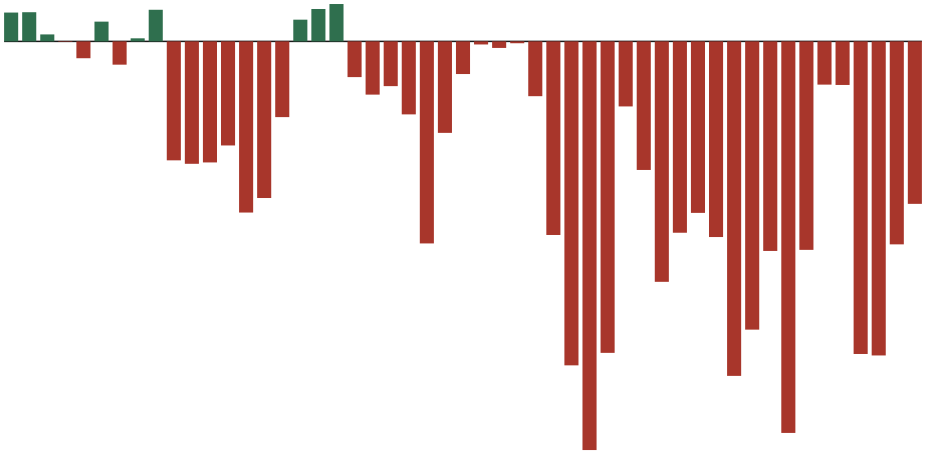
These three panels started by diving into stock buybacks at market scale: where they came from as a corporate practice and how broadly they occur in US equities today. Since the SEC adopted Rule 10b-18 in 1982, American nonfinancial corporations have retired a cumulative $12.4 trillion in equity (2025 dollars) — a half-century structural shift from net issuance to persistent net retirement.
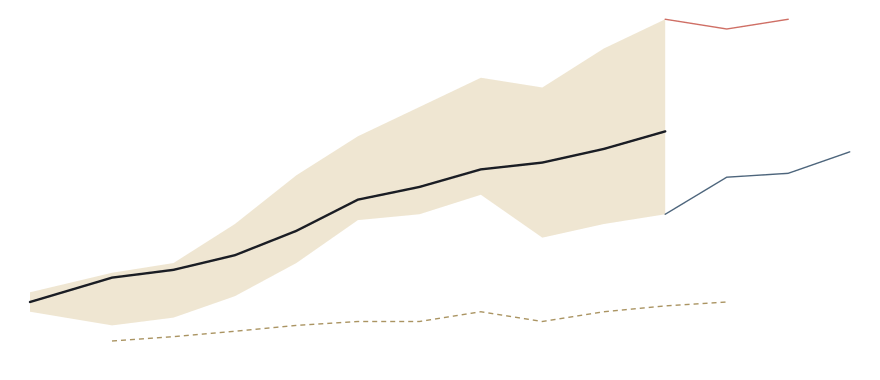
Panel II zooms out to contextualize the empirical basis of wealth concentration. Five independent methodologies disagree on the magnitude, but not the direction: the top-1% share of U.S. household wealth has risen from roughly 24% in 1985 to 30–38% by the mid-2020s, depending on whose estimates you trust. The question is how much — never whether.
Panel III connects these observations by exploring how stock buybacks have reshaped corporate cash flows and, through the incidence of share ownership, drive wealth concentration over the same period. In 1982 the American public corporation was a machine for turning revenue into productive capacity; by 2024 it is a machine for turning revenue — and borrowed money — into share price.